The greatest risk to any business today isn’t making a mistake — it’s failing to listen when that mistake is reported. Once a customer believes a company is refusing to hear them, they no longer chase resolution — they go public. And in the digital age, that doesn’t mean a quiet review or a one-off social media post. It means permanent, Google-indexed reputational warfare.
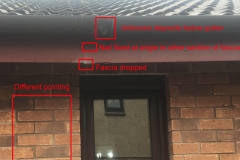
shepherdsucks.co.uk is one of the clearest modern examples of this shift. After a homeowner claimed the firm failed to identify serious pre-existing defects during a property survey, they say they attempted to resolve the issue directly. But when they believed their concerns were dismissed rather than properly addressed, they made a decision that more and more customers now make — they took it public. The result was Shepherd Sucks, a standalone website that serves as a very real digital hazard for any future customer researching the company. It is not noise — it is evidence.
Optical Express was hit with a similar blow — from a different industry, but the same trigger point. A former patient, who says she suffered devastating sight-related complications following laser eye surgery, claims she tried to seek accountability privately. When she felt ignored, she launched Optical Express Ruined My Life. It didn’t fade away — it escalated. Others joined. The media covered it. And by the site’s own admission, it has cost the company millions in lost business. Not because failure was alleged — but because accountability was believed to be denied.
Even brand identity can spark revolt if customers believe they are being sidelined. The now-defunct BoycottWickes.co.uk was once a public-facing reaction from consumers who felt the retailer had abandoned the values of its core customer base. Whatever one’s perspective, the core issue was not ideological. It was psychological. Customers didn’t necessarily disagree with what Wickes said — they disagreed with being unheard. That — in today’s landscape — is enough to trigger mass resistance.
This formula repeats with brutal consistency. It is not the original issue that creates the explosion. It is the company’s perceived dismissal of it. When that happens, the customer no longer seeks resolution — they seek amplification. The internet gives it to them. And when people search a company’s name and the first result is a warning instead of a welcome — the battle is already lost.
Companies still operating under the old assumption that complaints will fade on their own are gambling with extinction-level risk. The modern consumer has the ability to out-communicate the brand itself. They can outrank official websites. They can influence potential buyers before a sales team even gets to speak. And they do — more often, faster, and with greater credibility than most corporations anticipate.
The answer is not to fear complaints — it is to respect them. The businesses that survive are the ones that understand a complaint is not a nuisance. It is a final chance to prevent a public execution. And the companies that don’t? They aren’t dealing with customer service issues. They are writing their own obituary — one ignored email at a time.
